
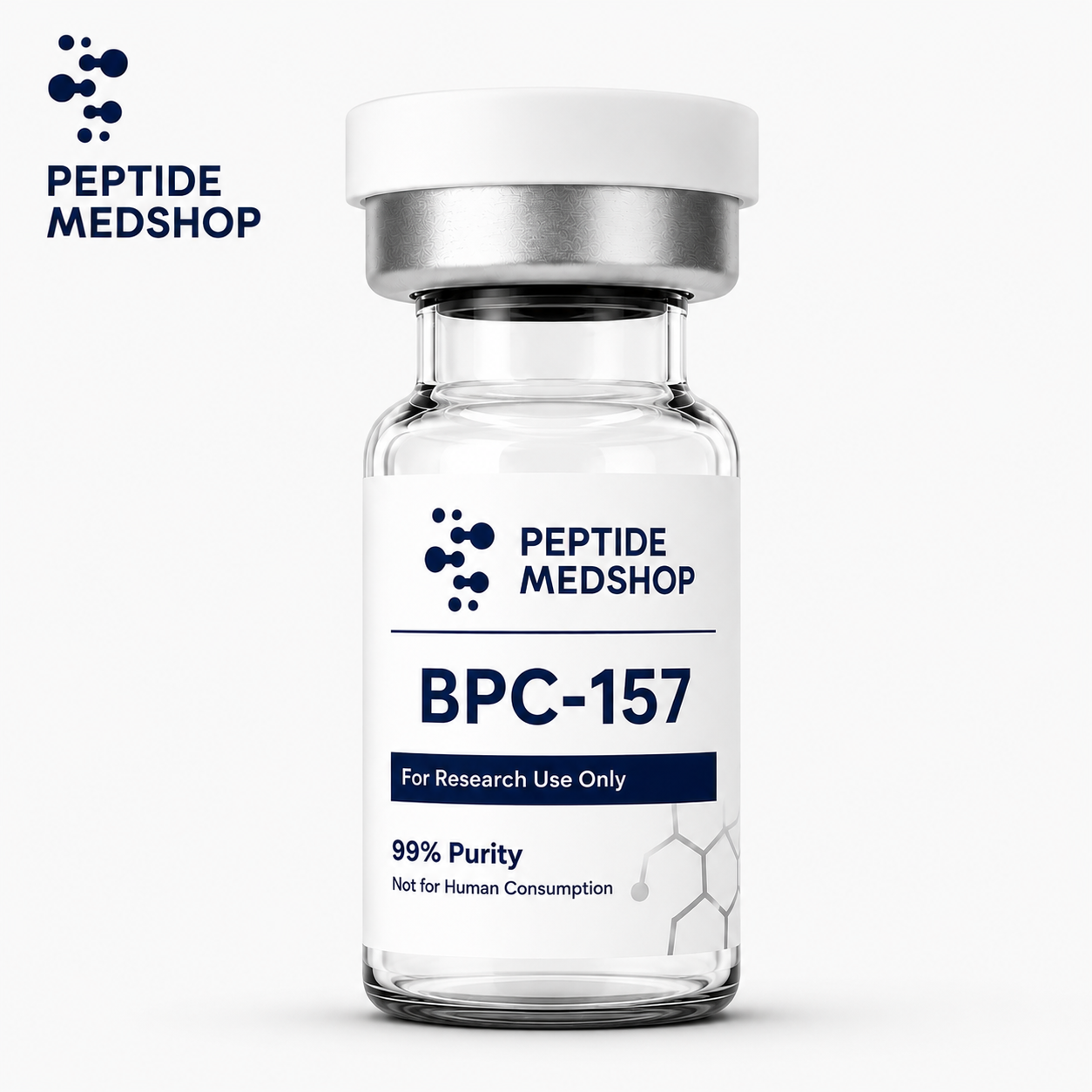
Buy BPC-157 Online
Buy BPC-157 Online (Body Protection Compound-157) is a synthetic 15-amino-acid peptide derived from a protective protein sequence found in human gastric juice. Over the past three decades, BPC-157 has become one of the most extensively studied investigational peptides in preclinical research because of its potential role in tissue biology, gastrointestinal research, angiogenesis, and cellular repair mechanisms.
Despite significant scientific interest, BPC-157 is not approved by the U.S. Food and Drug Administration (FDA) for treating any medical condition. Current evidence consists primarily of laboratory experiments and animal studies, while robust human clinical data remain limited. Researchers continue to investigate its biological mechanisms and potential future applications.
For information about research products and laboratory supplies, visit:
Website: https://peptidemedshop.com/
What Is BPC-157?
BPC-157 is a synthetic pentadecapeptide containing 15 amino acids. It was developed from a protein fragment identified in gastric juice and has been investigated in multiple areas of biomedical science.
Researchers have explored BPC-157 because of its reported biological activity in experimental models involving:
- Gastrointestinal tissue
- Tendons and ligaments
- Muscle tissue
- Blood vessel formation
- Nervous system biology
- Cellular repair mechanisms
Although hundreds of preclinical studies have been published, the absence of well-designed human clinical trials means that its therapeutic value has not been established.
How Does BPC-157 Work?
The exact mechanism of BPC-157 remains under investigation.
Current laboratory research suggests it may influence several biological pathways, including:
- Growth factor signaling
- Angiogenesis (formation of new blood vessels)
- Nitric oxide pathways
- Cellular migration
- Tissue remodeling
- Inflammatory signaling
Scientists continue studying how these mechanisms interact in experimental models. Whether these findings translate into meaningful clinical effects in humans remains unknown.
Current Areas of Scientific Research
Tissue Biology
Researchers study BPC-157 because of its reported effects on tissue repair processes in laboratory and animal models.
Gastrointestinal Research
Early studies investigated BPC-157 in experimental models of gastrointestinal injury, leading to continued interest in digestive system biology.
Vascular Biology
Scientists continue examining how BPC-157 may influence blood vessel development and vascular signaling under laboratory conditions.
Neuroscience
Experimental research has also explored potential interactions between BPC-157 and nervous system signaling pathways, although these findings remain preliminary.
Regenerative Biology
BPC-157 is frequently included in regenerative medicine research because of its reported cellular effects in preclinical investigations.
Why Researchers Study BPC-157
Scientific interest continues because BPC-157:
- Is derived from a gastric protein fragment
- Has decades of published laboratory research
- Has been evaluated across multiple organ systems in animal models
- Provides insight into tissue biology and repair mechanisms
- Continues to generate interest in peptide pharmacology
Researchers emphasize that encouraging animal data should not be interpreted as proof of effectiveness in humans.
Current Scientific Evidence
Research involving BPC-157 includes:
- Cell culture experiments
- Animal studies
- Molecular biology investigations
- Limited early human research
- Reviews of peptide pharmacology
Most published evidence comes from preclinical studies, and many experiments originate from a relatively small number of research groups. To date, no completed Phase II or Phase III clinical trials have established BPC-157 as a safe or effective treatment for any medical condition, and no FDA-approved formulation exists. Ongoing regulatory reviews also note limited human safety data and manufacturing concerns.
Product Quality Matters
Reliable laboratory research depends on high-quality materials.
Researchers generally look for:
- High-purity research compounds
- Reliable manufacturing practices
- Secure packaging
- Consistent quality standards
- Professional customer support
Using quality-controlled research materials supports reproducible laboratory investigations.
Storage Recommendations
To help preserve peptide stability:
- Store according to the manufacturer’s recommendations.
- Keep products in a cool, dry location.
- Protect from excessive heat and direct sunlight.
- Keep containers tightly sealed.
- Follow supplier guidance for laboratory handling and storage.
Proper storage helps maintain the quality of research materials.
Frequently Asked Questions
What is BPC-157?
BPC-157 is a synthetic 15-amino-acid peptide deriv from a protective gastric protein sequence and investigate in tissue biology, gastrointestinal research, vascular biology, and regenerative medicine.
Is BPC-157 FDA approve?
No. BPC-157 is not approve by the U.S. FDA for treating any disease or medical condition and remains an investigational compound.
Why do researchers study BPC-157?
Researchers investigate BPC-157 because of its potential interactions with tissue repair pathways, angiogenesis, gastrointestinal biology, and cellular signaling in laboratory models.
Is there human research?
Human evidence remains very limited. Most available scientific data come from laboratory and animal studies, and additional well-designed clinical trials are required before therapeutic conclusions can be drawn.
Why BPC-157 Continues to Receive Scientific Attention
Interest in BPC-157 remains strong because it combines several important areas of biomedical research, including:
- Tissue biology
- Gastrointestinal physiology
- Vascular signaling
- Cellular repair mechanisms
- Regenerative medicine
- Peptide pharmacology
Future research may determine whether promising laboratory findings translate into safe and effective clinical applications.
About Peptide Med Shop
Peptide Med Shop provides research products and laboratory supplies for scientific and educational purposes.
For more information:
Website: https://peptidemedshop.com/
WhatsApp: +1 (931) 305-2367
Telegram: @sourcesplug
Final Thoughts
BPC-157 remains one of the most widely studied investigational peptides in modern biomedical research. Its reported activity in laboratory models involving tissue biology, gastrointestinal physiology, and vascular signaling has generated considerable scientific interest. However, BPC-157 is not FDA-approve, and current evidence is largely limit to preclinical studies. More rigorous human clinical trials are need to establish its safety, effectiveness, and potential future role in medicine.
| Choose Option | 5mg*10Vials, 10mg*10Vials |
|---|
1 review for Buy BPC-157 Online
Add a review
Related products
Lyophilized
Lyophilized
Lyophilized
Lyophilized
Lyophilized
Lyophilized
Lyophilized
Lyophilized
Wayadan –
Great experience with Peptide Med Shop! The website is easy to navigate, well organised, and provides a smooth browsing experience. Definitely worth checking out!