Buy NAD+ Buffered Online
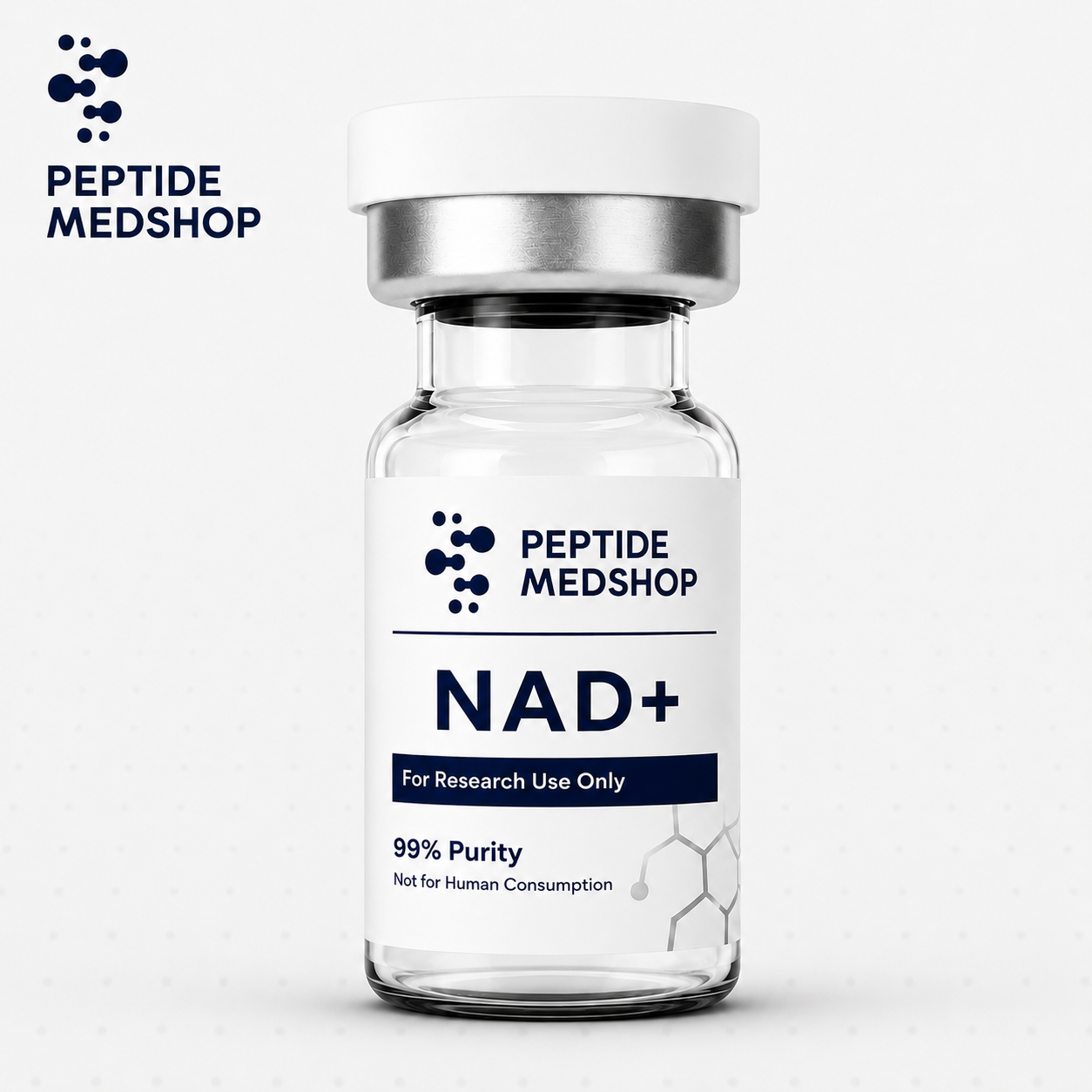
Buy NAD+ Buffered Online has become one of the most discussed research compounds in the fields of cellular metabolism, mitochondrial biology, and healthy ageing. Although it is commonly sold alongside peptides, NAD+ (Nicotinamide Adenine Dinucleotide) is not a peptide. Instead, it is a naturally occurring coenzyme found in every living cell, where it plays an essential role in energy production and numerous metabolic processes.
Buffered NAD+ formulations are designed to provide a more stable pH environment than unbuffered preparations, making them popular for laboratory research and controlled scientific investigations. Researchers continue to study NAD+ because of its involvement in mitochondrial function, cellular repair pathways, and metabolic regulation.
If you’re looking for premium research compounds and laboratory products, visit:
Website: https://peptidemedshop.com/
What Is NAD+ Buffered?
NAD+ Buffered is a pH-stabilized formulation of Nicotinamide Adenine Dinucleotide (NAD+), an essential coenzyme involved in hundreds of cellular reactions. Unlike peptides, NAD+ is a dinucleotide molecule derived from vitamin B3 (niacin) and is required for normal cellular energy production.
The “buffered” designation means that the formulation includes buffering agents to help maintain a more stable pH after preparation. This can improve laboratory handling and reduce the acidity commonly associated with unbuffered NAD+ formulations. Researchers often choose buffered formulations because they offer greater consistency during experimental work.
How Does NAD+ Work?
NAD+ is a critical coenzyme that participates in oxidation-reduction (redox) reactions throughout the body. It helps transfer electrons during cellular respiration, allowing mitochondria to generate ATP, the primary energy currency of cells.
Researchers continue to investigate NAD+ because of its involvement in:
- Cellular energy production
- Mitochondrial function
- DNA repair pathways
- Oxidative stress responses
- Sirtuin enzyme activity
- Metabolic regulation
Because NAD+ levels naturally decline with age in many tissues, scientists are actively studying how changes in NAD+ biology may relate to healthy ageing and metabolic health. However, many potential therapeutic applications remain under investigation.
Why Choose Buffered NAD+?
Buffered NAD+ differs from standard formulations by incorporating a buffering system that helps maintain a more neutral and stable pH.
Potential advantages include:
- Improved pH stability
- More consistent laboratory handling
- Better formulation stability
- Reduced acidity compared with unbuffered preparations
- Reliable preparation for research applications
These characteristics have made buffered NAD+ increasingly popular among laboratories conducting cellular and metabolic research.
Current Research Areas
Scientists continue exploring NAD+ in a wide range of research fields.
Cellular Energy Research
NAD+ is essential for ATP production, making it a central focus in studies of cellular energy metabolism.
Mitochondrial Biology
Researchers investigate how NAD+ supports mitochondrial function and communication within cells.
Healthy Ageing Research
Age-related declines in NAD+ have generated interest in understanding its role in healthy aging and longevity biology.
DNA Repair
NAD+ serves as a substrate for enzymes involved in DNA maintenance and cellular stress responses.
Metabolic Research
Scientists continue to study the relationship among NAD+, glucose metabolism, insulin sensitivity, and overall metabolic regulation.
Why Researchers Are Interested in NAD+
NAD+ has become one of the most important molecules in modern biomedical research because it participates in numerous essential biological processes.
Researchers value NAD+ because it:
- Exists naturally in every living cell
- Supports mitochondrial energy production
- Participates in DNA repair pathways
- Plays a role in metabolic regulation
- Continues to be studied in healthy ageing research
Although these research areas are promising, many proposed health applications have not yet been confirmed through large human clinical trials.
Product Quality Matters
High-quality research compounds are essential for reliable laboratory work.
When selecting NAD+ Buffered, look for suppliers that emphasise:
- High-purity products
- Consistent manufacturing standards
- Secure packaging
- Reliable sourcing
- Professional customer support
Quality materials contribute to reproducible and dependable research results.
Storage Recommendations
To help preserve product quality:
- Store according to the manufacturer’s instructions.
- Keep products in a cool, dry environment.
- Protect from excessive heat and direct sunlight.
- Keep containers sealed until use.
- Follow supplier guidance for handling and storage after preparation.
Proper storage helps maintain the stability of research materials.
Why Buy from Peptide Med Shop?
At Peptide Med Shop, we are committed to supplying premium research compounds and laboratory products backed by dependable customer service.
Why customers choose us:
- Premium research products
- Secure online ordering
- Carefully packaged shipments
- Competitive pricing
- Reliable customer support
- Wide selection of laboratory supplies
Browse our complete product catalogue today:
Website: https://peptidemedshop.com/
Frequently Asked Questions
What is NAD+?
NAD+ (Nicotinamide Adenine Dinucleotide) is a naturally occurring coenzyme that supports cellular energy production and numerous metabolic processes. It is not a peptide.
What does “buffered” mean?
Buffered NAD+ contains pH-stabilizing ingredients that help maintain a more consistent pH compared with unbuffered formulations, which may improve handling and stability in research settings.
Is NAD+ Buffered FDA-approved?
Research-grade NAD+ Buffered products sold by peptide suppliers are generally intended for laboratory research and are not FDA-approved medications.
Why is NAD+ important?
Researchers study NAD+ because it is essential for mitochondrial function, ATP production, DNA repair, and metabolic regulation.
Why NAD+ Research Continues to Expand
Interest in NAD+ continues to grow because of its central role in cellular biology.
Current areas of investigation include:
- Cellular metabolism
- Mitochondrial health
- Energy production
- Healthy aging
- DNA repair mechanisms
- Redox biology
As research advances, scientists hope to understand better how NAD+ influences long-term cellular health and metabolic function.
Contact Peptide Med Shop
For product information, order assistance, or customer support, contact us today.
Website: https://peptidemedshop.com/
WhatsApp: +1 (931) 305-2367
Telegram: @sourcesplug
Final Thoughts
NAD+ Buffered is an advanced research formulation designed to provide a stable, pH-buffered version of Nicotinamide Adenine Dinucleotide, one of the body’s most important cellular coenzymes. Unlike peptides, NAD+ is a naturally occurring molecule involved in energy metabolism, mitochondrial function, and DNA repair. Buffered formulations are valued in laboratory settings for their improved pH stability and handling characteristics. While interest in NAD+ continues to expand in areas such as metabolism and healthy aging, many proposed therapeutic benefits remain under scientific investigation.
If you’re looking for premium research compounds and trusted laboratory products, visit:
Website: https://peptidemedshop.com/
For product inquiries or assistance with your order:
WhatsApp: +1 (931) 305-2367
Telegram: @sourcesplug
Choose Peptide Med Shop for premium research compounds, dependable customer support, and a commitment to quality laboratory products.
| Choose Option | 100mg*10Vials, 500mg*10Vials, 1000mg*10Vials |
|---|
Be the first to review “Buy NAD+ Buffered Online”
Related products
Antioxidant & Cellular Signaling
Antioxidant & Cellular Signaling
Antioxidant & Cellular Signaling
Antioxidant & Cellular Signaling
Antioxidant & Cellular Signaling
Antioxidant & Cellular Signaling
Antioxidant & Cellular Signaling
Antioxidant & Cellular Signaling
Reviews
There are no reviews yet.