
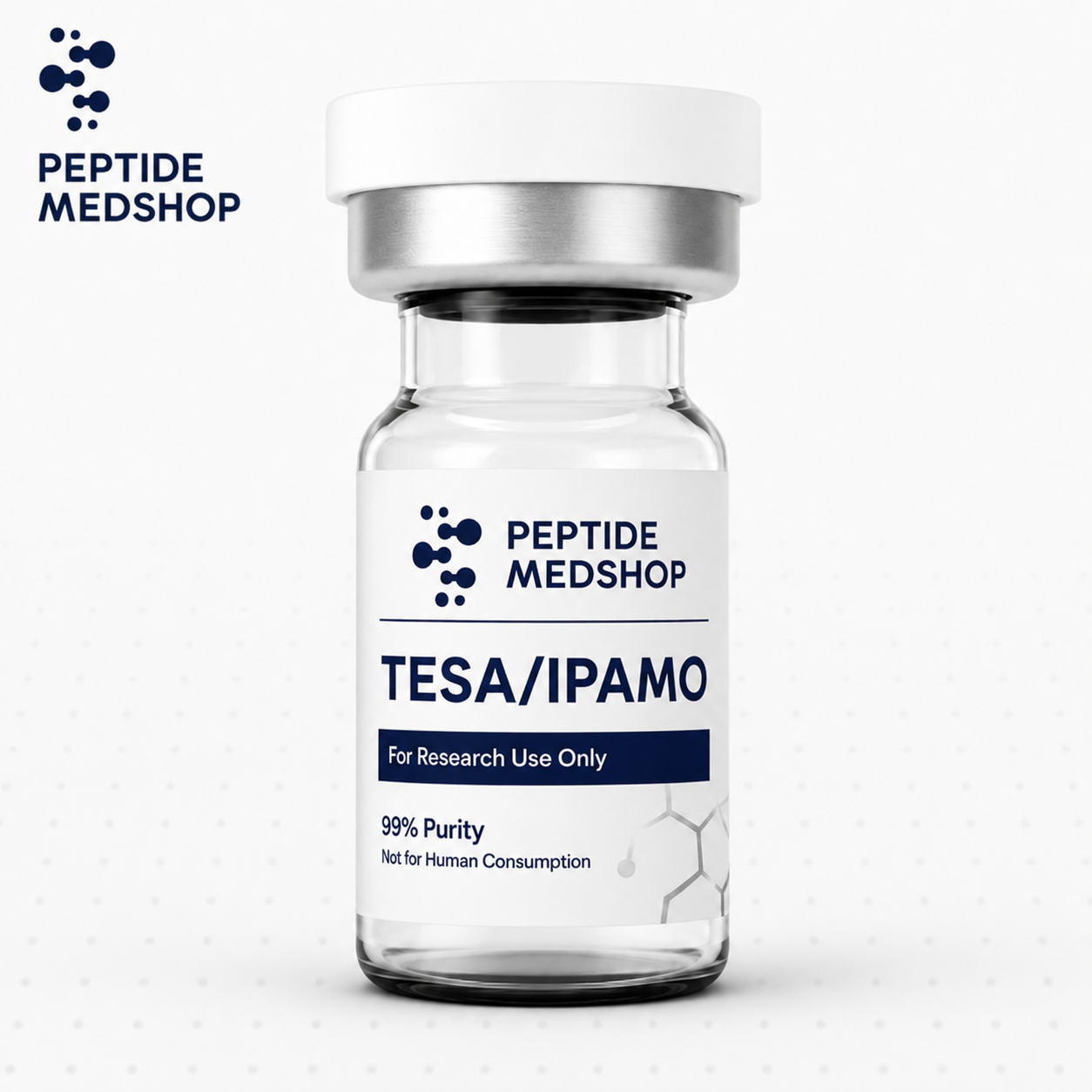
Buy Tesa/Ipamo Online
Buy Tesa/Ipamo Online blend, a combination of Tesamorelin and Ipamorelin, has become one of the most discussed peptide combinations in growth hormone research. Researchers are interested in this blend because the two peptides stimulate the body’s natural growth hormone pathways through different mechanisms. While Tesamorelin has an established medical use for a specific condition, the combination of Tesamorelin and Ipamorelin is primarily offered as a research product, and its combined effects have not been confirmed in human clinical trials.
If you’re looking for premium research peptides and laboratory products, visit:
Website: https://peptidemedshop.com/
What Is Tesa/Ipamo?
Tesa/Ipamo combines two peptides:
- Tesamorelin – A synthetic Growth Hormone-Releasing Hormone (GHRH) analog that stimulates the pituitary gland to release growth hormone.
- Ipamorelin – A selective Growth Hormone Secretagogue (GHS) that activates the ghrelin receptor to encourage natural growth hormone release.
Researchers are interested in combining these peptides because they influence the growth hormone axis through complementary pathways, although the blend itself has not been validated in published human trials.
How Does Tesa/Ipamo Work?
The two peptides work differently:
Tesamorelin
Tesamorelin mimics the body’s natural Growth Hormone-Releasing Hormone (GHRH), encouraging the pituitary gland to produce growth hormone.
Ipamorelin
Ipamorelin activates the ghrelin receptor, which can stimulate natural growth hormone pulses without directly supplying growth hormone.
Together, these different mechanisms are the reason researchers study the blend, but more clinical research is needed to determine its safety and effectiveness as a combination.
Why Researchers Are Interested
The Tesa/Ipamo blend has generated interest in research related to:
- Growth hormone physiology
- Body composition
- Metabolic function
- Recovery mechanisms
- Endocrine signaling
Most of this interest is based on the known biology of the individual peptides and preclinical or limited human data rather than direct evidence for the combined product.
Potential Research Areas
Scientists continue to investigate peptides like Tesamorelin and Ipamorelin in areas including:
Growth Hormone Research
Both peptides are designed to stimulate the body’s own growth hormone release rather than supplying synthetic growth hormone.
Body Composition Studies
Tesamorelin has been clinically studied for reducing excess visceral abdominal fat in adults with HIV-associated lipodystrophy. The Tesa/Ipamo combination has not been proven for body composition changes in the general population.
Recovery Research
Growth hormone pathways are involved in tissue maintenance and repair, making these peptides a subject of ongoing scientific investigation.
Metabolic Studies
Researchers are also examining how growth hormone signaling may influence metabolism and related biological processes.
Benefits of Choosing a Quality Research Product
When purchasing research peptides, quality is essential.
A trusted supplier should provide:
- Premium-grade research products
- Secure packaging
- Reliable customer support
- Consistent product quality
- Careful handling and shipping
Choosing a reputable supplier helps support research quality and product consistency.
Storage Recommendations
To maintain peptide quality:
- Store according to the manufacturer’s instructions.
- Protect from excessive heat and direct sunlight.
- Refrigerate reconstituted products if instructed.
- Keep products sealed until use.
Always follow the storage guidance supplied with your product.
Why Buy from Peptide Med Shop?
At Peptide Med Shop, we are commit to providing quality research products and dependable customer service.
Why customers choose us:
- Premium research peptides
- Reliable product selection
- Secure online ordering
- Fast order processing
- Excellent customer support
- Carefully packaged shipments
Visit today:
Website: https://peptidemedshop.com/
Frequently Asked Questions
What is Tesa/Ipamo?
Tesa/Ipamo is a research blend combining Tesamorelin and Ipamorelin, two peptides that stimulate growth hormone release through different biological pathways.
Is Tesa/Ipamo FDA approve?
No. Tesamorelin is FDA approve for a specific indication (HIV-associated lipodystrophy), but the Tesamorelin/Ipamorelin blend itself is not FDA approve.
Is the blend support by human clinical trials?
The individual components have been study to different degrees, but there are currently no publish human clinical trials establishing the safety or efficacy of the combine Tesa/Ipamo blend.
Who purchases research peptides?
Research peptides are typically supply for laboratory and scientific research purposes in accordance with applicable regulations and product labeling.
Why Product Quality Matters
Research outcomes depend on consistency and quality. Choosing a trusted supplier helps ensure:
- Reliable sourcing
- High manufacturing standards
- Secure packaging
- Professional customer support
- Consistent product quality
Contact Peptide Med Shop
If you have questions about our products or need assistance with an order, we’re here to help.
Website: https://peptidemedshop.com/
WhatsApp: +1 (931) 305-2367
Telegram: @sourcesplug
Final Thoughts
The Tesa/Ipamo (Tesamorelin & Ipamorelin) blend continues to attract attention in peptide research because it combines two compounds that act on different parts of the body’s natural growth hormone signaling system. While Tesamorelin has an establish medical use for a specific condition, Ipamorelin remains investigational, and the combination has not yet been confirm through human clinical trials.
If you’re searching for high-quality research peptides and laboratory products from a trusted supplier, visit:
For product inquiries or order assistance, contact us:
Website: https://peptidemedshop.com/
WhatsApp: +1 (931) 305-2367
Telegram: @sourcesplug
Choose Peptide Med Shop for premium research products, dependable service, and a commitment to quality.
| Quantity | 3mg, 5mg |
|---|
Be the first to review “Buy Tesa/Ipamo Online”
Related products
Blends
Blends
Blends
Blends
Blends
Reviews
There are no reviews yet.