
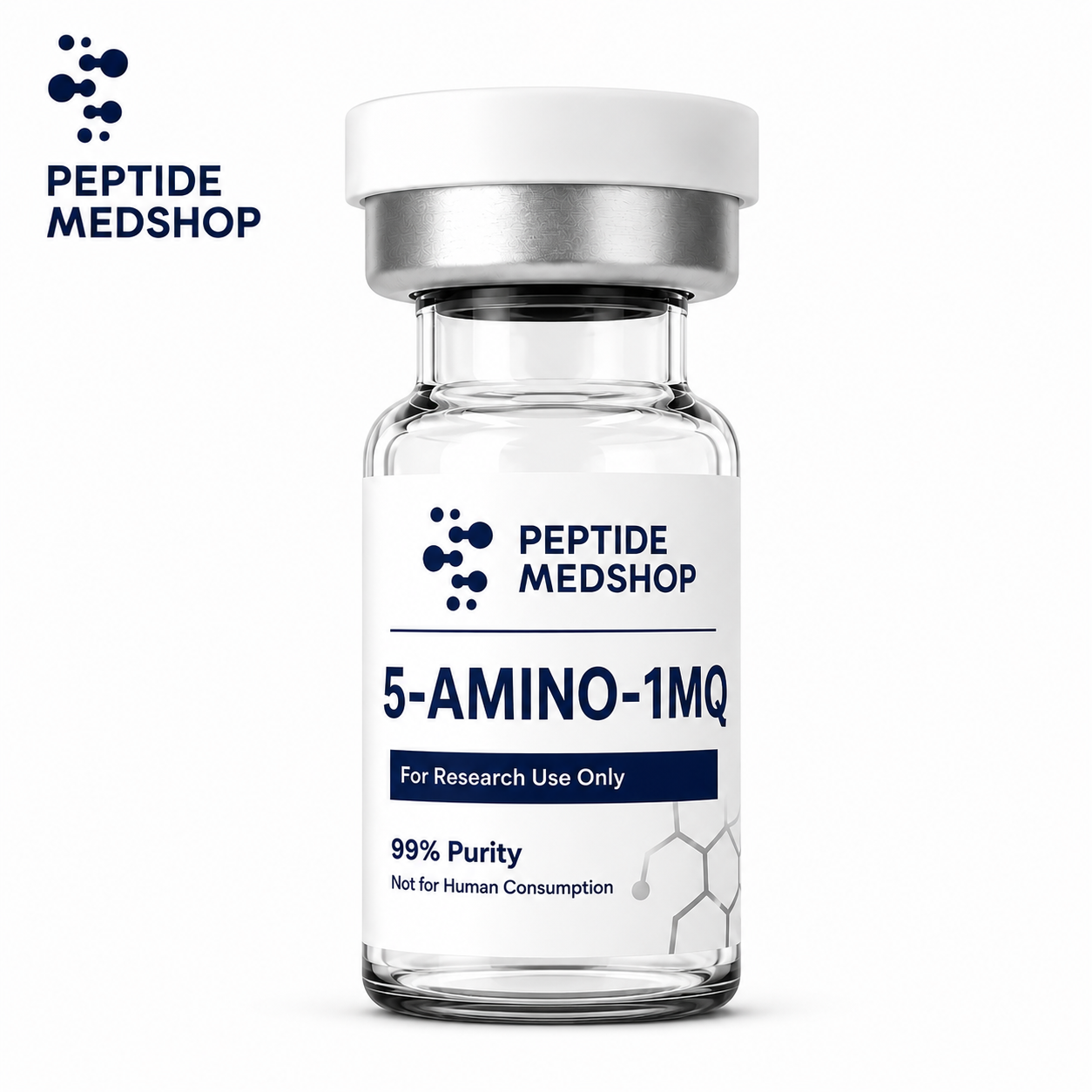
Buy 5-Amino-1MQ Online
Buy 5-Amino-1MQ Online (5-Amino-1-Methylquinolinium) is an investigational small-molecule compound, not a peptide, that has gained attention in metabolic research because of its ability to inhibit nicotinamide N-methyltransferase (NNMT). Researchers are studying this compound to better understand how NNMT influences cellular metabolism, energy regulation, and fat tissue biology.
Although 5-Amino-1MQ is often discussed alongside research peptides, it belongs to a different chemical class. It remains an experimental research compound and has not been approved by the U.S. Food and Drug Administration (FDA) or other major regulatory agencies for treating any disease. At present, evidence comes almost entirely from laboratory and animal research.
For information about research products and laboratory supplies, visit:
Website: https://peptidemedshop.com/
What Is 5-Amino-1MQ?
5-Amino-1MQ is a synthetic compound designed to selectively inhibit the enzyme NNMT (nicotinamide N-methyltransferase). NNMT participates in nicotinamide metabolism and influences cellular NAD+ pathways, methylation, and energy regulation.
Researchers became interested in NNMT after discovering that increased NNMT activity is associated with altered metabolic function in certain experimental models. By blocking this enzyme, scientists can study how changes in cellular metabolism affect adipose tissue, mitochondrial activity, and energy balance.
How Does 5-Amino-1MQ Work?
Current laboratory studies suggest that 5-Amino-1MQ inhibits NNMT, which may influence several metabolic pathways.
Researchers continue investigating its possible effects on:
- NNMT enzyme activity
- Cellular NAD+ metabolism
- Energy expenditure
- Mitochondrial function
- Fat cell biology
- Cellular methylation pathways
Experimental models suggest that NNMT inhibition may increase intracellular NAD+ availability and alter metabolic signaling. However, these findings come primarily from preclinical research and have not been confirmed in human clinical trials.
Current Areas of Scientific Research
Metabolic Research
Scientists investigate how NNMT inhibition affects cellular energy metabolism and metabolic regulation.
Adipose Tissue Biology
Researchers study how 5-Amino-1MQ influences fat-cell function and lipid metabolism in laboratory models.
Mitochondrial Research
Because NAD+ plays an important role in cellular energy production, researchers examine whether NNMT inhibition influences mitochondrial biology.
Healthy Aging Research
Scientists are also exploring how metabolic pathways involving NAD+ relate to cellular aging and metabolic health, although these investigations remain in the early stages.
Why Researchers Study 5-Amino-1MQ
Scientific interest continues because 5-Amino-1MQ:
- Selectively inhibits NNMT
- Is a cell-permeable small molecule
- Supports research into NAD+ metabolism
- Helps investigate metabolic signaling pathways
- Provides insight into adipose tissue biology
- Continues to generate interest in metabolism research
Researchers emphasise that promising laboratory findings should not be interpreted as established health benefits for humans.
Current Scientific Evidence
Published research involving 5-Amino-1MQ includes:
- Laboratory experiments
- Cell culture studies
- Animal research
- Biochemical investigations
Animal studies have reported changes in fat-cell metabolism and energy expenditure following NNMT inhibition. However, there are currently no published human clinical trials, so the safety and effectiveness of 5-Amino-1MQ in people remain unknown. Additional research will be required before any therapeutic conclusions can be drawn.
Product Quality Matters
Reliable scientific investigations depend on high-quality laboratory materials.
Researchers generally look for:
- High-purity research compounds
- Reliable manufacturing practices
- Secure packaging
- Consistent quality
- Professional customer support
Quality-controlled materials help support reproducible laboratory research.
Storage Recommendations
To help preserve research material quality:
- Store according to the manufacturer’s instructions.
- Keep containers tightly sealed.
- Protect from excessive heat, moisture, and direct sunlight.
- Store in a cool, dry location.
- Follow supplier guidance for laboratory handling.
Proper storage helps maintain product stability during research.
Frequently Asked Questions
Is 5-Amino-1MQ a peptide?
No. Despite often being group with research peptides, 5-Amino-1MQ is a small-molecule NNMT inhibitor, not a peptide.
Is 5-Amino-1MQ FDA approved?
No. 5-Amino-1MQ is not approved by the U.S. FDA for treating any medical condition and remains an investigational research compound.
Why do researchers study 5-Amino-1MQ?
Researchers investigate 5-Amino-1MQ because it helps explore NNMT biology, NAD+ metabolism, mitochondrial function, and cellular energy regulation.
Is there human research?
At present, there are no published human clinical trials evaluating the safety or effectiveness of 5-Amino-1MQ. Current knowledge is based on laboratory and animal studies.
Why 5-Amino-1MQ Continues to Receive Scientific Attention
Interest in 5-Amino-1MQ remains strong because it targets an important metabolic enzyme involved in cellular energy regulation.
Researchers continue exploring:
- NNMT biology
- NAD+ metabolism
- Mitochondrial function
- Energy homeostasis
- Adipose tissue research
- Cellular metabolism
As additional studies become available, scientists hope to better understand whether findings from preclinical models translate into meaningful human applications.
About Peptide Med Shop
Peptide Med Shop provides research products and laboratory supplies for scientific and educational purposes.
For more information:
Website: https://peptidemedshop.com/
WhatsApp: +1 (931) 305-2367
Telegram: @sourcesplug
Final Thoughts
5-Amino-1MQ is an investigational small-molecule NNMT inhibitor that has become an important research tool in metabolism and cellular energy studies. While laboratory and animal research has identified interesting biological mechanisms involving NAD+ metabolism and adipose tissue function, no human clinical trials have yet established its safety or therapeutic effectiveness. Because of this, 5-Amino-1MQ remains a research compound rather than an approved medical treatment. Continue scientific investigation will help clarify its biological role and determine whether future clinical applications are supported by high-quality evidence.
| Choose Option | 5mg*10Vials, 50mg*10Vials |
|---|
1 review for Buy 5-Amino-1MQ Online
Add a review
Related products
Lab Supplies
Lyophilized
Lyophilized
Lyophilized
Lyophilized
Lyophilized
Lyophilized
Lyophilized
Noboxi –
Really impressed with the overall service. Everything was clear, well organized, and handled professionally. I had a great experience and would happily recommend it.