
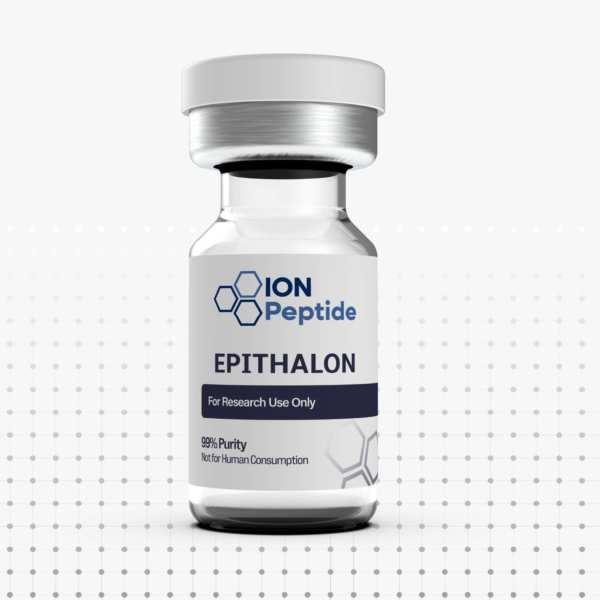

Buy Epithalon 10mg Online
Buy Epithalon 10mg Online. Peptide research has become one of the most rapidly advancing fields in biotechnology and molecular biology. Scientists continue to investigate short chains of amino acids because of their potential roles in cellular signalling, biological regulation, and complex physiological processes. Among the many peptides that have attracted scientific attention is Epithalon, also known as Epitalon, a synthetic tetrapeptide that has been studied extensively in ageing research and cellular biology.
Epithalon has gained interest within the scientific community because of its unique structure and its relationship to the naturally occurring peptide known as Epithalamin, which is produced by the pineal gland. Researchers have explored Epithalon in laboratory studies involving cellular ageing, gene expression, and telomerase activity, making it one of the more widely discussed peptides in longevity-related research.
This educational article explores the science behind Epithalon 10mg, its molecular characteristics, areas of scientific investigation, and why it continues to be an important subject in peptide research.
What Is Epithalon?
Epithalon is a synthetic tetrapeptide, meaning it consists of four amino acids arranged in a specific sequence:
- Alanine
- Glutamic Acid
- Aspartic Acid
- Glycine
The peptide sequence is commonly written as:
Ala-Glu-Asp-Gly (AEDG)
Epithalon was developed as a synthetic analogue of Epithalamin, a naturally occurring peptide extract associated with the pineal gland. Researchers have investigated whether this synthetic peptide may influence certain biological pathways associated with cellular function and ageing.
Because of its relatively simple structure and broad research potential, Epithalon has become one of the most recognised compounds in longevity and peptide science.
Understanding Peptides
Peptides are short chains of amino acids connected by peptide bonds.
Researchers study peptides because they participate in numerous biological processes, including:
- Cellular communication
- Molecular signaling
- Protein interactions
- Physiological regulation
- Gene expression
- Biological coordination
Peptides function as important signalling molecules throughout the body and provide researchers with valuable tools for understanding complex biological systems.
The study of peptides has expanded significantly over the past several decades, leading to increased interest in compounds such as Epithalon.
The Molecular Structure of Epithalon
The molecular structure of a peptide often determines how it behaves in biological systems.
Researchers examine several characteristics of Epithalon, including:
Amino Acid Composition
The arrangement of amino acids influences biological activity.
Molecular Stability
Scientists investigate how the peptide behaves under various laboratory conditions.
Cellular Interactions
Researchers study how peptides interact with different molecular pathways.
Structure-Function Relationships
Understanding how molecular structure affects biological behaviour remains a central goal of peptide science.
The simplicity of Epithalon’s structure makes it an attractive model for studying peptide biology.
Epithalon and Cellular Research
One of the reasons Epithalon has attracted significant attention is its involvement in research related to cellular biology.
Researchers have investigated its potential relationship with:
- Cellular signaling
- Gene expression
- DNA-related processes
- Cellular maintenance pathways
- Biological ageing research
Although numerous laboratory studies have explored these topics, many questions remain regarding the precise mechanisms involved.
Epithalon and Telomere Research
One of the most discussed areas of Epithalon research involves telomeres.
Telomeres are protective structures located at the ends of chromosomes. Scientists study telomeres because they play important roles in cellular biology and have become an important topic in ageing research.
Researchers have explored whether Epithalon may influence biological pathways related to:
- Telomere biology
- Cellular maintenance
- Gene regulation
- Chromosomal stability
These investigations have contributed significantly to scientific interest in the peptide.
However, much of this research remains experimental and continues to be evaluated by the scientific community.
Why Researchers Study Epithalon
Scientists continue to investigate Epithalon because it provides opportunities to better understand:
Cellular Aging
Researchers study biological mechanisms associated with ageing.
Molecular Regulation
Understanding how signalling molecules influence cellular behaviour.
Gene Expression
Investigating interactions between peptides and genetic pathways.
Systems Biology
Examining how biological networks function together.
Peptide Chemistry
Exploring structure-function relationships in synthetic peptides.
The breadth of these research areas has made Epithalon one of the most widely discussed peptides in longevity science.
Applications in Scientific Research
Epithalon is frequently examined in several fields of scientific investigation.
Molecular Biology
Studying peptide interactions and signalling pathways.
Gerontology Research
Investigating biological processes associated with ageing.
Biochemistry
Understanding molecular interactions and cellular communication.
Biotechnology
Developing analytical techniques and research tools.
Systems Biology
Exploring how peptides influence interconnected biological systems.
These fields continue to expand as scientific technologies improve.
| Quantity | 10 mg, 50 mg |
|---|
Be the first to review “Buy Epithalon 10mg Online”
Related products
Lyophilized
Lyophilized
Lyophilized
Lyophilized
Lyophilized
Lyophilized
Lyophilized
Lyophilized
Reviews
There are no reviews yet.