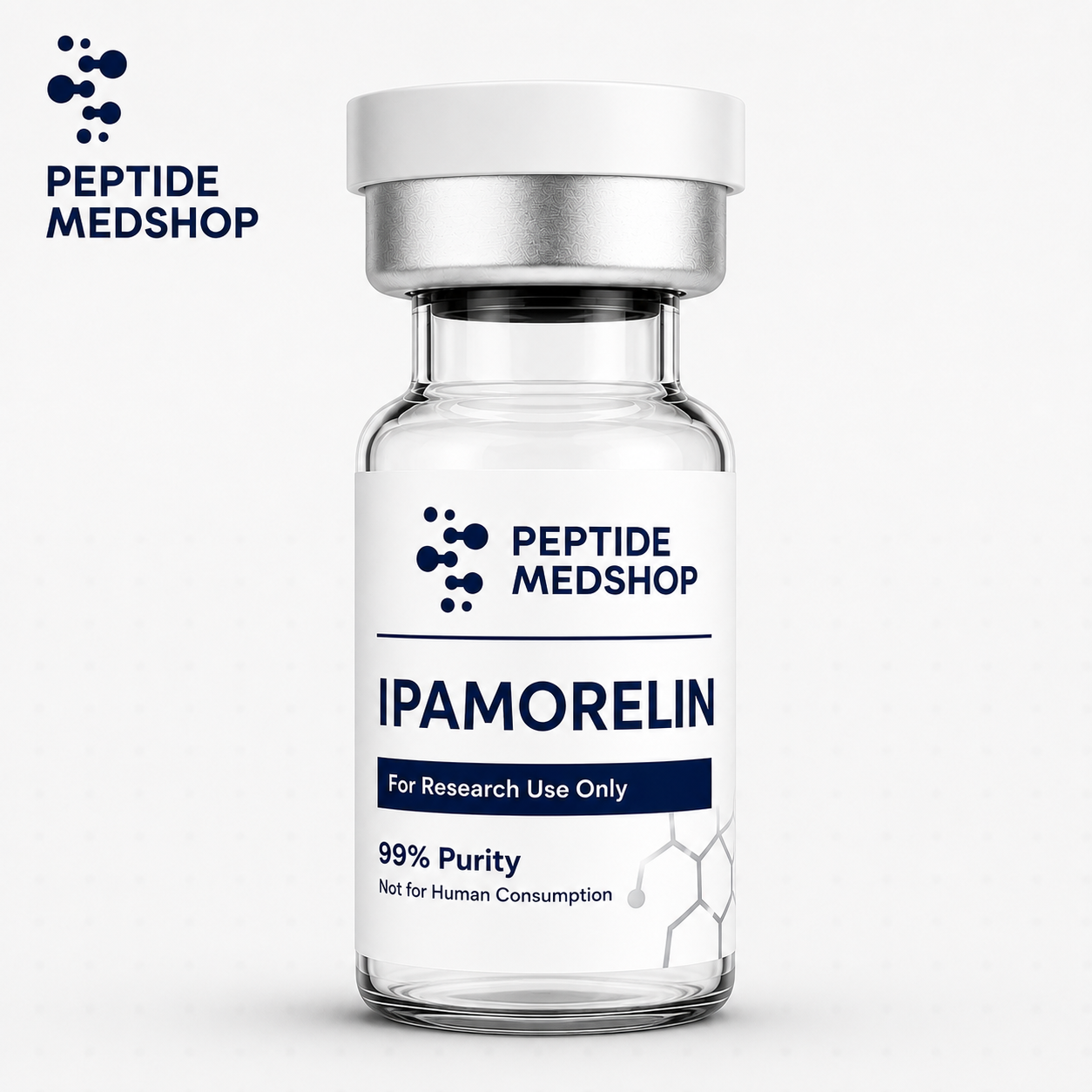
Buy Ipamorelin Online
Buy Ipamorelin Online is a synthetic pentapeptide classified as a growth hormone secretagogue (GHS). It was originally developed to stimulate the release of endogenous growth hormone by selectively activating the growth hormone secretagogue receptor (GHS-R1a), also known as the ghrelin receptor. Since its discovery, Ipamorelin has attracted interest in endocrinology, metabolism, and regenerative biology because of its relatively selective pharmacological profile compared with earlier growth hormone-releasing peptides.
Despite ongoing scientific interest, Ipamorelin is not approved by the U.S. Food and Drug Administration (FDA) for treating any medical condition. Published human research remains limited, and additional well-designed clinical trials are needed to establish its safety and effectiveness for specific therapeutic applications. Researchers continue to study Ipamorelin as an investigational compound in laboratory and clinical settings.
For information about research products and laboratory supplies, visit:
Website: https://peptidemedshop.com/
What Is Ipamorelin?
Ipamorelin is a laboratory-developed peptide consisting of five amino acids. Unlike growth hormone itself, Ipamorelin does not directly replace the hormone. Instead, it is designed to activate the ghrelin receptor (GHS-R1a), encouraging the pituitary gland to release growth hormone through physiological signaling pathways.
Researchers have described Ipamorelin as one of the more selective growth hormone secretagogues because early pharmacology studies suggested it stimulates growth hormone release with comparatively little effect on hormones such as cortisol and prolactin. These findings continue to be explored in research settings.
How Does Ipamorelin Work?
Current research indicates that Ipamorelin binds to the GHS-R1a receptor, the same receptor activated by the natural hormone ghrelin.
Scientists continue investigating how this interaction influences:
- Growth hormone release
- Growth hormone signalling
- Insulin-like Growth Factor-1 (IGF-1) pathways
- Cellular metabolism
- Tissue repair biology
- Endocrine regulation
Because Ipamorelin works through endogenous signalling mechanisms rather than supplying growth hormone directly, researchers remain interested in understanding how these pathways function under experimental conditions.
Current Areas of Scientific Research
Endocrinology
Researchers continue studying Ipamorelin to better understand growth hormone physiology and endocrine signalling.
Metabolism Research
Laboratory investigations explore how growth hormone secretagogues influence metabolic pathways and energy regulation.
Tissue Biology
Preclinical studies have examined how growth hormone signalling may relate to tissue maintenance and repair, although clinical significance remains uncertain.
Growth Hormone Secretagogue Research
Ipamorelin is frequently investigated alongside other compounds acting on complementary pathways to better understand hormonal regulation in experimental models.
Why Researchers Study Ipamorelin
Scientific interest in Ipamorelin continues because it:
- Selectively targets the ghrelin receptor
- Has been evaluated in laboratory and early human studies
- Helps researchers investigate endogenous growth hormone release
- Provides insight into endocrine physiology
- Continues to be studied in metabolism and regenerative biology
Researchers emphasize that promising laboratory findings should not be interpreted as established clinical benefits.
Current Scientific Evidence
Published research involving Ipamorelin includes:
- Laboratory studies
- Animal research
- Pharmacology investigations
- Early-phase human studies
Although Ipamorelin has demonstrated selective growth hormone-releasing activity in research settings, evidence supporting routine clinical use remains limited. Clinical development was not completed, and no FDA-approved therapeutic indication currently exists.
Product Quality Matters
Reliable scientific research depends on high-quality laboratory materials.
Researchers generally look for:
- High-purity research compounds
- Secure packaging
- Reliable manufacturing standards
- Consistent quality
- Professional customer support
Quality-controlled materials help support reproducible laboratory investigations.
Storage Recommendations
To help preserve peptide stability:
- Store according to the manufacturer’s recommendations.
- Keep products in a cool, dry environment.
- Protect from excessive heat and light.
- Keep containers tightly sealed.
- Follow supplier guidance for laboratory storage and handling.
Proper storage helps maintain research material quality.
Frequently Asked Questions
What is Ipamorelin?
Ipamorelin is a synthetic pentapeptide growth hormone secretagogue studied for its selective activation of the ghrelin receptor and stimulation of endogenous growth hormone release in research settings.
Is Ipamorelin FDA approve?
No. Ipamorelin is not approved by the U.S. FDA for treating any medical condition and remains an investigational compound.
Why do researchers study Ipamorelin?
Researchers investigate Ipamorelin to better understand growth hormone physiology, ghrelin receptor signaling, endocrine regulation, and related biological pathways.
Is there human research?
Yes. Limited human studies have been conduct, but the available evidence is insufficient to establish routine clinical use, and further research is require.
Why Ipamorelin Continues to Receive Scientific Attention
Interest in Ipamorelin remains strong because it represents a relatively selective approach to studying endogenous growth hormone release.
Current research continues to explore:
- Endocrine physiology
- Ghrelin receptor biology
- Growth hormone regulation
- Metabolic signaling
- Tissue biology
- Peptide pharmacology
Future investigations may further clarify the biological role of Ipamorelin and determine whether additional clinical applications can be support by high-quality evidence.
About Peptide Med Shop
Peptide Med Shop provides research products and laboratory supplies for scientific and educational purposes.
For more information:
Website: https://peptidemedshop.com/
WhatsApp: +1 (931) 305-2367
Telegram: @sourcesplug
Final Thoughts
Ipamorelin remains one of the most widely studied growth hormone secretagogues in peptide research. Its selective interaction with the ghrelin receptor has made it an important tool for investigating endocrine physiology and growth hormone regulation. While laboratory and early clinical studies have contribute valuable scientific knowledge, Ipamorelin is not FDA-approve, and current evidence does not support establish therapeutic use. Continued high-quality research will be essential to better understand its long-term safety, biological mechanisms, and potential future clinical relevance.
| Choose Option | 2mg*10Vials, 5mg*10Vials, 10mg*10Vials |
|---|
1 review for Buy Ipamorelin Online
Add a review
Related products
Lyophilized
Lyophilized
Lyophilized
Lyophilized
Lyophilized
Lyophilized
Lyophilized
Lyophilized
Dadini –
Excellent customer experience with a modern and organised layout