
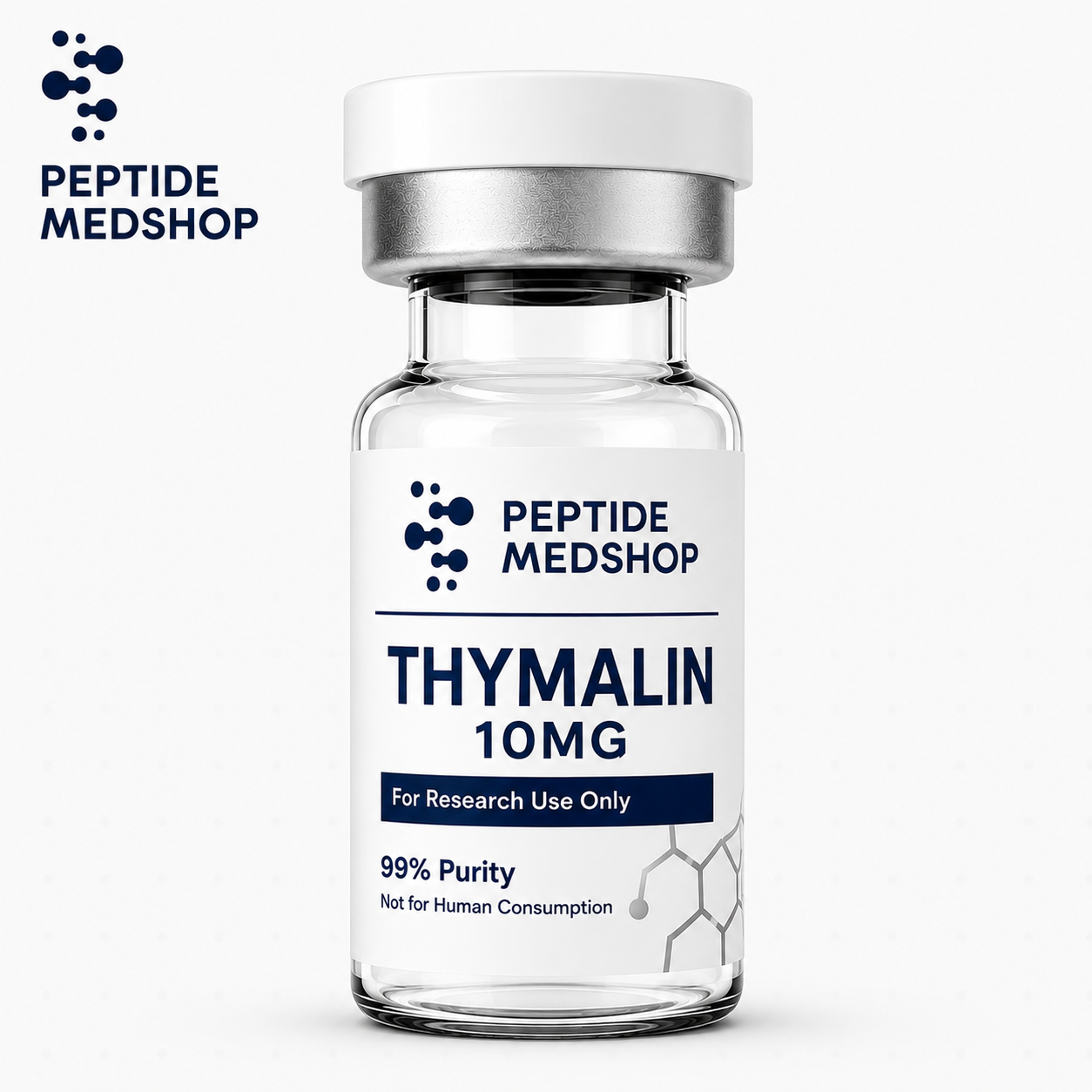
Buy Thymalin 10mg Online
Buy Thymalin 10mg Online is an investigational thymic peptide complex that has been studied for several decades in the fields of immunology, ageing research, and cellular biology. Originally developed in Russia, Thymalin is derived from peptides isolated from the thymus gland and has been investigated for its potential role in supporting immune-cell regulation and age-related changes in thymic function.
Although Thymalin has been used clinically in Russia and parts of Eastern Europe, it has not been approved by the U.S. Food and Drug Administration (FDA) or many other major regulatory agencies. Most of the available research comes from Russian scientific literature, and additional high-quality international clinical trials are needed to confirm its safety and effectiveness.
For information about research products and laboratory supplies, visit:
Website: https://peptidemedshop.com/
What Is Thymalin?
Thymalin is a polypeptide complex extracted from thymus tissue. Unlike synthetic peptides consisting of a single amino acid sequence, Thymalin contains a mixture of naturally occurring short peptides that researchers believe contribute to its biological activity.
The thymus is a specialised immune organ responsible for the development and maturation of T lymphocytes (T cells), which play a central role in adaptive immunity. Because thymic function naturally declines with age, researchers have long been interested in compounds that may help better understand thymic biology and immune regulation.
How Does Thymalin Work?
Researchers continue studying how Thymalin influences immune-cell function.
Published laboratory research suggests it may be involved in:
- T-cell maturation
- Immune-cell differentiation
- Cellular communication
- Gene expression regulation
- Cytokine signaling
- Age-related immune biology
Some studies suggest that certain peptide components within Thymalin may influence gene expression and cellular signalling pathways associated with immune regulation. However, these mechanisms remain under investigation and require additional independent confirmation.
Current Areas of Research
Scientists continue investigating Thymalin in several fields of biomedical science.
Immunology Research
One of the primary research interests involves understanding how thymic peptides influence T-cell development and immune-cell communication.
Healthy Ageing Research
Because thymic function naturally decreases over time, researchers are exploring whether thymic peptide biology contributes to age-related changes in immune function.
Cellular Biology
Laboratory studies examine how thymic peptide complexes interact with cellular signalling pathways involved in differentiation and tissue homeostasis.
Bioregulator Research
Thymalin is also studied as part of the broader family of peptide bioregulators developed in Russian research programs investigating tissue-specific signalling molecules.
Why Researchers Study Thymalin
Thymalin continues attracting scientific interest because it:
- Is derived from thymus tissue
- Has decades of published research
- Is investigated for immune-cell biology
- Is associated with aging research
- Provides insight into thymic peptide regulation
- Remains an active topic in peptide bioregulator science
Researchers emphasize that although published findings are encouraging, additional international studies using modern clinical trial standards are necessary.
Current Scientific Evidence
Research involving Thymalin includes:
- Laboratory studies
- Animal research
- Clinical investigations conducted primarily in Russia and Eastern Europe
- Studies involving immune regulation
- Healthy aging research
While some studies have report favorable findings, the overall evidence base is limit by study design differences, regional publication patterns, and the lack of large multicenter random trials that meet current international standards.
Product Quality Matters
For laboratory research, selecting quality materials is essential.
Researchers typically look for:
- High-purity research materials
- Reliable manufacturing
- Secure packaging
- Consistent quality standards
- Professional customer support
High-quality materials contribute to reproducible laboratory research.
Storage Recommendations
To help preserve peptide quality:
- Store according to the manufacturer’s recommendations.
- Keep products in a cool, dry place.
- Protect from excessive heat and sunlight.
- Keep containers tightly sealed.
- Follow supplier guidance for storage and laboratory handling.
Proper storage supports product stability.
Frequently Asked Questions
What is Thymalin?
Thymalin is a thymus-derived polypeptide complex studied in research involving immune regulation, T-cell biology, and healthy aging.
Is Thymalin FDA approve?
No. Thymalin is not approve by the U.S. FDA for the treatment or prevention of any disease. Although it has been use clinically in Russia and Eastern Europe, broader regulatory approval has not been establish.
Why do researchers study Thymalin?
Researchers investigate Thymalin because of its potential influence on thymic biology, immune-cell maturation, and age-relate immune changes.
Is the evidence strong?
Thymalin has decades of publish research, but much of it comes from a single research tradition. Additional large, independent clinical trials are needed before firm conclusions can be make.
Why Thymalin Continues to Receive Scientific Attention
Interest in Thymalin remains high because the thymus plays a critical role in adaptive immunity.
Current research continues to explore:
- T-cell biology
- Immune regulation
- Cellular communication
- Healthy aging
- Gene expression
- Peptide bioregulators
As new research emerges, scientists hope to better understand how thymic peptides influence immune function and age-related biological processes.
About Peptide Med Shop
Peptide Med Shop provides research products and laboratory supplies for scientific and educational purposes.
For more information:
Website: https://peptidemedshop.com/
WhatsApp: +1 (931) 305-2367
Telegram: @sourcesplug
Final Thoughts
Thymalin 10mg remains an important subject in peptide and immunology research because of its association with thymic function, immune-cell regulation, and healthy aging. While several decades of publish work—primarily from Russia and Eastern Europe—have contribute valuable scientific insights, further high-quality international clinical studies are require to confirm many of the propose biological effects. At present, Thymalin should be regard as an investigational research compound rather than an establish medical therapy.
To learn more about research products and laboratory supplies, visit:
Website: https://peptidemedshop.com/
WhatsApp: +1 (931) 305-2367
Telegram: @sourcesplug
Be the first to review “Buy Thymalin 10mg Online”
Related products
Antioxidant & Cellular Signaling
Antioxidant & Cellular Signaling
Antioxidant & Cellular Signaling
Antioxidant & Cellular Signaling
Antioxidant & Cellular Signaling
Antioxidant & Cellular Signaling
Antioxidant & Cellular Signaling
Antioxidant & Cellular Signaling
Reviews
There are no reviews yet.