
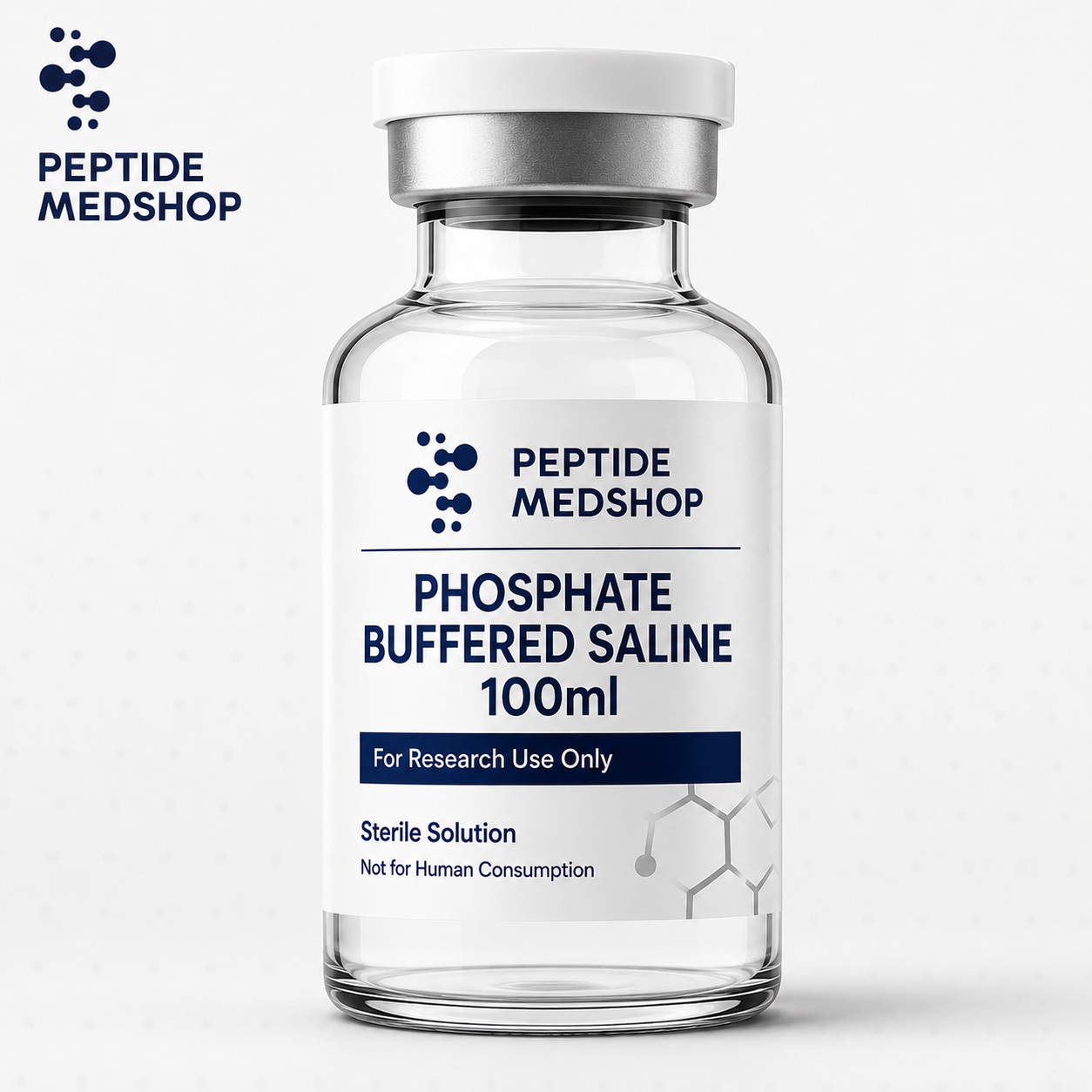
Buy Phosphate Buffered Saline 100ml Online
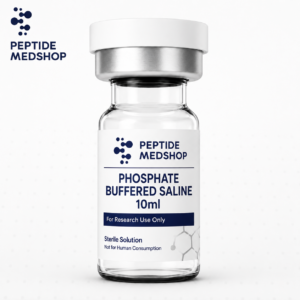
Buy Phosphate Buffered Saline 100ml Online is an essential laboratory reagent widely used in biological, biochemical, molecular biology, microbiology, and cell culture research. Known for its ability to maintain a stable physiological pH and osmotic balance, PBS is one of the most commonly used buffer solutions in research laboratories around the world. Whether you’re washing cells, preparing biological samples, diluting reagents, or performing immunological assays, a high-quality PBS solution is an indispensable part of many laboratory workflows. (Merck Sigma-Aldrich PBS Overview)
If you’re looking for premium-quality Phosphate Buffered Saline 100ml, Peptide Med Shop provides dependable laboratory products supported by responsive customer service.
Website: https://peptidemedshop.com/
WhatsApp: +1 (931) 305-2367
Telegram: @sourcesplug
What is phosphate-buffered saline (PBS)?
Phosphate Buffered Saline, commonly abbreviated as PBS, is a balanced salt solution formulated with sodium chloride, potassium chloride, sodium phosphate, and potassium phosphate. These ingredients create a stable buffer that maintains a pH of approximately 7.2–7.4, closely matching physiological conditions found in living tissues. This isotonic environment helps protect cells from osmotic stress during laboratory handling. (Thermo Fisher Scientific PBS Guide)
Unlike distilled water, which can disrupt cell membranes, PBS helps preserve cellular integrity and is therefore widely used in laboratory research involving cells and biological specimens.
The 100ml presentation offers a practical volume for laboratories conducting frequent experiments while reducing the need to open multiple smaller containers.
Why Researchers Choose PBS 100ml
Researchers rely on PBS because it offers exceptional versatility across numerous laboratory applications. Common uses include:
- Washing cultured cells before and after experiments
- Preparing biological specimens
- Diluting antibodies and laboratory reagents
- Maintaining physiological pH during experiments
- Tissue preparation
- Protein purification workflows
- Immunohistochemistry
- ELISA procedures
- Molecular biology protocols
- Flow cytometry sample preparation
Its compatibility with many experimental techniques has made PBS one of the most frequently used buffer solutions in scientific research. (Boston BioProducts PBS Overview)
Key Benefits of Phosphate Buffered Saline 100ml
Maintains Physiological pH
PBS is specifically formulated to maintain a stable pH throughout laboratory procedures. Stable pH conditions help protect proteins, enzymes, and cells from unwanted changes that could affect research outcomes.
Isotonic Solution
The salt concentration closely resembles physiological conditions, helping minimise osmotic damage to cells during washing and handling procedures.
Ready-to-Use Convenience
A sterile 100ml bottle is ideal for laboratories that perform routine research, eliminating the need to prepare buffer solutions from scratch and improving workflow efficiency.
Supports Reliable Research
Using consistent, high-quality PBS contributes to reproducible laboratory results by reducing variability associated with buffer preparation.
Broad Laboratory Compatibility
PBS is routinely used in:
- Cell biology
- Molecular biology
- Immunology
- Biochemistry
- Protein chemistry
- Histology
- Microbiology
- Pharmaceutical research
- Biotechnology laboratories
Common Research Applications
Phosphate Buffered Saline 100ml is suitable for a wide variety of research procedures, including:
- Cell washing
- Tissue rinsing
- Sample transport
- Antibody dilution
- Protein sample preparation
- DNA and RNA workflows
- Microscopy preparation
- Cell suspension preparation
- Western blot protocols
- Flow cytometry
- Immunofluorescence staining
- General laboratory rinsing procedures
Because of its versatility, PBS is considered a standard reagent in academic, biotechnology, pharmaceutical, and clinical research laboratories.
Why Product Quality Matters
Buffer quality plays an important role in laboratory consistency. Variations in pH, contamination, or improper formulation can affect experimental reproducibility.
Researchers generally look for PBS products that offer:
- Sterile manufacturing
- Laboratory-grade quality
- Accurate pH formulation
- High-purity ingredients
- Secure packaging
- Reliable consistency between batches
Purchasing from a trusted supplier helps ensure confidence in every experiment.
Why Buy Phosphate Buffered Saline 100ml from Peptide Med Shop?
At Peptide Med Shop, quality and customer satisfaction are top priorities. Researchers choose Peptide Med Shop for dependable laboratory products backed by responsive support and a straightforward ordering experience.
Benefits include:
- Premium research-grade laboratory products
- Secure ordering process
- Reliable customer service
- Carefully sourced materials
- Competitive pricing
- Fast communication
Visit:
Website: https://peptidemedshop.com/
WhatsApp: +1 (931) 305-2367
Telegram: @sourcesplug
Proper Storage Recommendations
To help maintain product quality and sterility:
- Store according to the manufacturer’s instructions.
- Keep the bottle tightly sealed when not in use.
- Avoid introducing contaminants during dispensing.
- Protect the solution from excessive heat or freezing if not recommended.
- Use clean laboratory techniques when handling.
Always follow the storage guidance supplied with the specific product.
Frequently Asked Questions
What is PBS 100ml used for?
PBS is widely used for washing cells, preparing biological samples, diluting reagents, maintaining physiological pH, tissue handling, protein research, immunological assays, and numerous molecular biology applications.
Why is PBS preferred over distilled water?
Unlike distilled water, PBS maintains both physiological pH and osmotic balance, helping preserve cell integrity during laboratory procedures.
Is PBS sterile?
Many commercially prepared PBS products are manufactured under sterile conditions. Researchers should always verify the product specifications before use.
What pH does PBS maintain?
Most standard PBS formulations maintain a pH between 7.2 and 7.4, closely matching physiological conditions.
Is Phosphate Buffered Saline intend for medical treatment?
No. Phosphate Buffered Saline is intend for laboratory and research applications. It is not approve as a treatment for medical conditions or for therapeutic use.
Tips for Selecting High-Quality PBS
When purchasing Phosphate Buffered Saline, consider the following:
- Purchase from a reputable supplier.
- Review the product specifications carefully.
- Verify sterility if required for your workflow.
- Follow recommended storage conditions.
- Handle using proper laboratory techniques to maintain product integrity.
Choosing quality reagents helps support accurate and reproducible scientific research.
Order Premium Phosphate Buffered Saline 100ml Today
If you’re searching for high-quality Phosphate Buffered Saline 100ml, Peptide Med Shop offers dependable laboratory products suitable for a wide range of biological and biochemical research applications.
Whether you’re working in cell culture, molecular biology, immunology, protein analysis, microbiology, or biotechnology, PBS remains one of the most valuable buffer solutions available for maintaining consistent laboratory conditions.
For product information, ordering assistance, or customer support, contact:
Website: https://peptidemedshop.com/
WhatsApp: +1 (931) 305-2367
Telegram: @sourcesplug
Final Thoughts
Phosphate Buffered Saline (PBS) 100ml continues to be one of the most trusted and widely used laboratory buffer solutions because of its ability to maintain physiological pH and osmotic balance across countless research applications. From cell culture and molecular biology to immunology, protein purification, and microscopy, PBS supports reliable laboratory workflows and reproducible scientific results. By choosing a high-quality, sterile PBS product from a trusted supplier like Peptide Med Shop, researchers can help ensure consistency and quality in their experiments.
Be the first to review “Buy Phosphate Buffered Saline 100ml Online”
Related products
Antioxidant & Cellular Signaling
Antioxidant & Cellular Signaling
Antioxidant & Cellular Signaling
Antioxidant & Cellular Signaling

Antioxidant & Cellular Signaling
Antioxidant & Cellular Signaling

Antioxidant & Cellular Signaling
Antioxidant & Cellular Signaling
Reviews
There are no reviews yet.