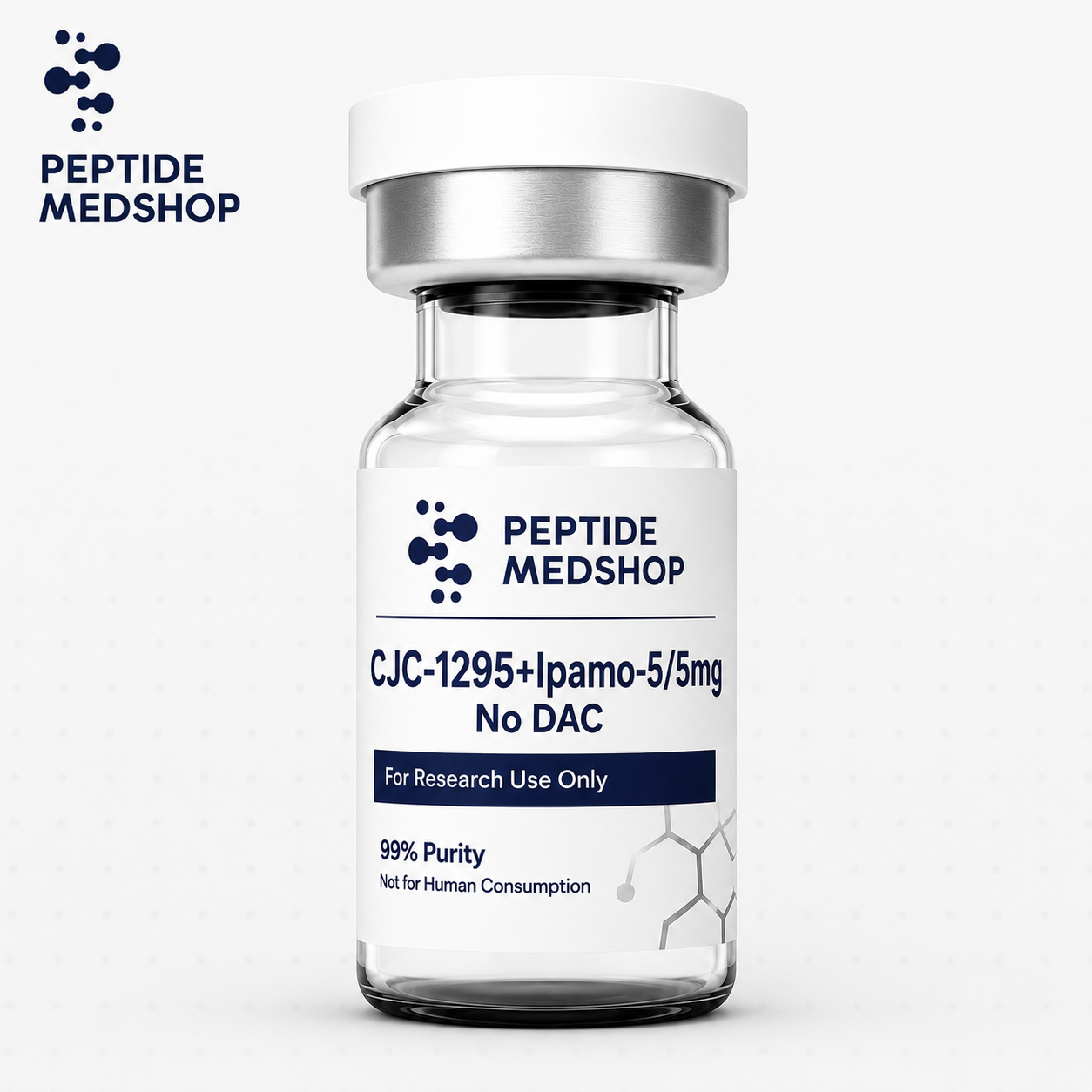
Buy CJC-1295+Ipamo-5/5mg No DAC Online
Buy CJC-1295+Ipamo-5/5mg No DAC Online are synthetic peptides that have attracted interest in laboratory research related to growth hormone physiology. Researchers have studied these compounds individually and in combination to better understand their effects on growth hormone signalling and endocrine function. While they are frequently discussed together in scientific literature and research communities, it is important to note that these compounds are investigational and are not approved as treatments for the general public in many jurisdictions.
This article provides an educational overview of CJC-1295 + Ipamorelin (No DAC 5 mg/5 mg), explaining their mechanisms, the distinction between No DAC and DAC formulations, and the current state of research.
What Is CJC-1295 (No DAC)?
CJC-1295 is a synthetic peptide designed to interact with growth hormone–releasing hormone (GHRH) receptors. The No DAC version does not contain the Drug Affinity Complex (DAC), resulting in a shorter duration of activity than the DAC formulation.
Because of this difference, researchers often distinguish between:
- CJC-1295 No DAC: Shorter-acting and commonly studied for its more transient effects.
- CJC-1295 with DAC: Longer-lasting because the DAC component extends circulation time.
The choice of formulation depends on the research question rather than one being inherently superior to the other.
What Is Ipamorelin?
Ipamorelin is another synthetic peptide investigated for its interaction with receptors involved in growth hormone release. In laboratory settings, researchers have examined how it influences growth hormone secretion while minimising activity at some other receptor systems.
Much of the scientific interest in Ipamorelin relates to understanding endocrine signalling pathways rather than establishing therapeutic uses.
Why Are They Studied Together?
Researchers sometimes investigate CJC-1295 No DAC and Ipamorelin together because they act through different biological pathways involved in growth hormone regulation.
Studies have explored whether combining these peptides produces different physiological responses than either compound alone. These investigations are intended to improve scientific understanding of hormone regulation and peptide pharmacology.
No DAC vs. DAC
One of the most common questions concerns the distinction between No DAC and DAC formulations.
No DAC
- Shorter duration of activity.
- Often selected for studies evaluating transient biological responses.
- Different pharmacokinetic profile from DAC formulations.
DAC
- Longer circulation time.
- Designed for extended activity.
- Frequently examined in studies requiring sustained exposure.
Researchers select the formulation that best matches the objectives of a specific experimental protocol.
Current Research
Scientific publications have explored topics such as:
- Growth hormone physiology.
- Endocrine signalling.
- Peptide pharmacology.
- Pharmacokinetics.
- Experimental hormone regulation.
Although these investigations have contributed valuable scientific knowledge, research continues, and important questions remain regarding long-term safety, efficacy, and appropriate clinical applications.
Laboratory Handling
Research laboratories typically emphasise:
- Proper storage according to the manufacturer’s recommendations.
- Accurate labeling.
- Controlled laboratory environments.
- Careful documentation.
- Compliance with institutional protocols.
Handling procedures vary depending on the specific research setting and applicable regulations.
Importance of Quality Documentation
Researchers generally look for suppliers that provide documentation such as:
- Batch identification.
- Certificate of Analysis (when available).
- Manufacturing information.
- Storage recommendations.
Documentation supports laboratory quality systems and research reproducibility.
Regulatory Considerations
The regulatory status of peptides varies by country. Many research peptides are intended for laboratory investigation and are not approved as medicines for general therapeutic use. Institutions and researchers should follow all applicable laws, regulations, and ethical requirements when acquiring and studying investigational compounds.
Learning More
For general information about a supplier’s catalogue and policies, readers may visit PeptideMedShop at https://peptidemedshop.com/. Any evaluation of research materials should include reviewing available documentation, applicable regulations, and institutional requirements.
Frequently Asked Questions
What does “No DAC” mean?
“No DAC” indicates that the peptide does not include the Drug Affinity Complex, giving it a different pharmacokinetic profile than DAC-containing formulations.
Why are CJC-1295 and Ipamorelin researched together?
Researchers investigate them together to better understand growth hormone regulation and related biological mechanisms.
Are these compounds approved medicines?
Their regulatory status varies by jurisdiction. In many countries, these peptides are investigational and are not approved for routine therapeutic use.
Can research findings predict clinical outcomes?
Not necessarily. Results from laboratory and preclinical research do not automatically translate to safe or effective treatments in humans.
Conclusion
CJC-1295 + Ipamorelin (No DAC 5 mg/5 mg) remains an active area of scientific investigation. Research continues to explore how these peptides influence hormone signalling, pharmacokinetics, and endocrine physiology. As with any investigational compounds, findings should be interpreted carefully and within the context of well-designed scientific studies. Anyone involved in peptide research should follow applicable regulations, institutional policies, and ethical standards while relying on high-quality scientific evidence.
1 review for Buy CJC-1295+Ipamo-5/5mg No DAC Online
Add a review
Related products
Lyophilized
Lyophilized
Lyophilized
Lyophilized
Lyophilized
Lyophilized
Lyophilized
Lyophilized
Howomav –
⭐⭐⭐⭐⭐ Really great experience! The service was smooth, reliable, and easy from beginning to end. Very pleased with the overall experience and would happily recommend it! 😊👍