
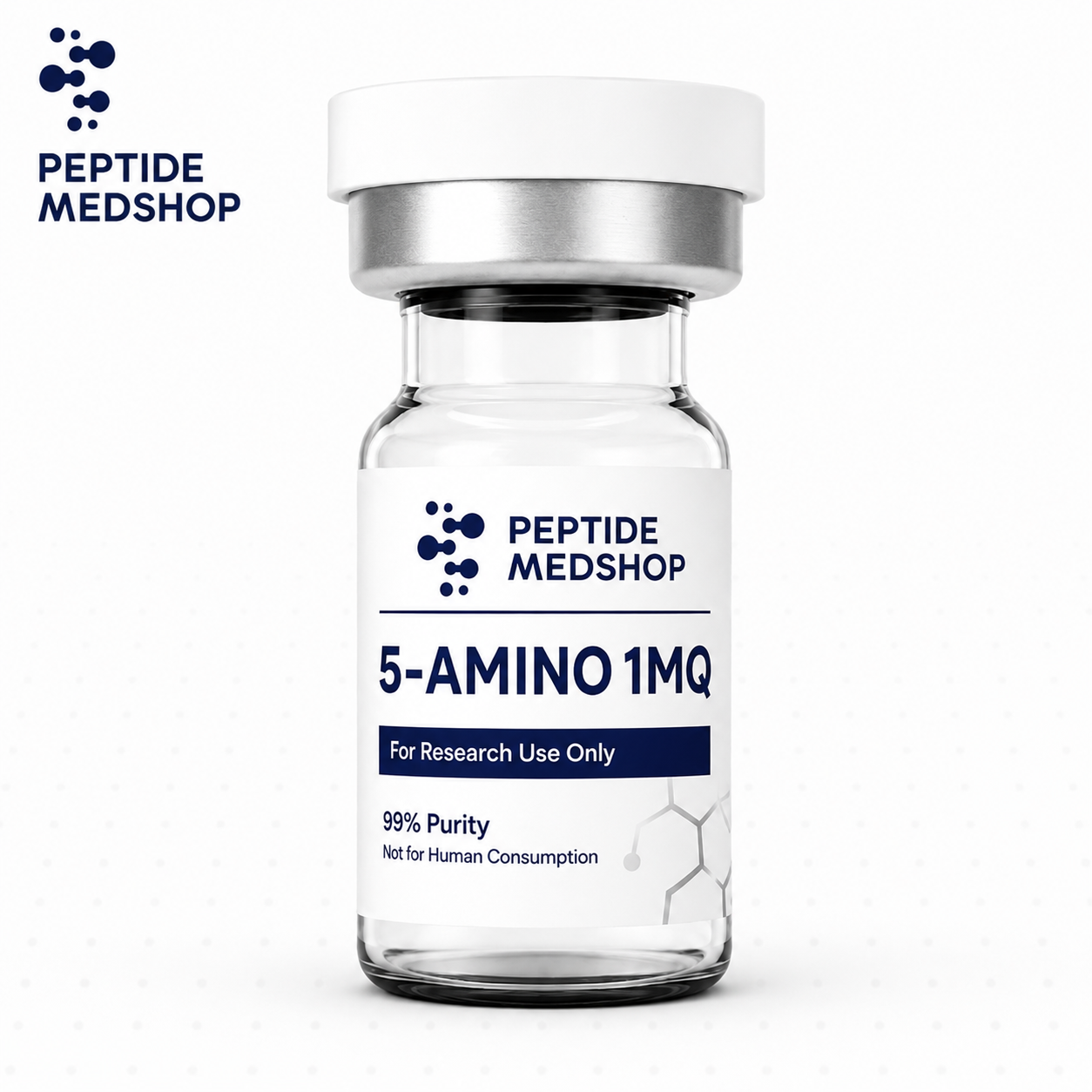


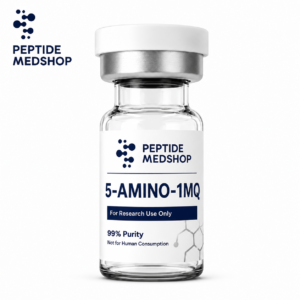
Buy 5-Amino 1MQ Online
Buy 5-Amino 1MQ Online. As interest in metabolic health, body composition, and cellular wellness continues to grow, 5-Amino 1MQ has become one of the most talked-about research compounds in the wellness community. Researchers are investigating its unique mechanism of action and its potential role in supporting metabolic pathways related to fat metabolism and cellular energy production.
Unlike many compounds commonly grouped with peptides, 5-Amino 1MQ is actually a small-molecule NNMT (Nicotinamide N-Methyltransferase) inhibitor rather than a peptide. This distinction is important because its mechanism of action differs significantly from traditional peptide therapies.
If you’re looking for premium research compounds, visit https://peptidemedshop.com/.
What Is 5-Amino 1MQ?
5-Amino 1MQ, also known as 5-Amino-1-Methylquinolinium, is a research compound that inhibits the NNMT enzyme. Scientists have been studying NNMT because elevated activity of this enzyme has been associated with changes in metabolism and energy regulation.
By inhibiting NNMT, researchers are exploring whether 5-Amino 1MQ may help preserve nicotinamide for NAD+ production, an essential coenzyme involved in cellular energy metabolism. Current evidence for these effects comes primarily from laboratory and animal studies, and more human research is needed.
How does 5-amino-1MQ work?
The primary mechanism of 5-Amino 1MQ involves blocking the activity of the NNMT enzyme.
NNMT influences how the body processes nicotinamide, a precursor used to produce NAD+. NAD+ is essential for:
- Cellular energy production
- Healthy mitochondrial function
- Metabolic regulation
- DNA repair processes
- General cellular maintenance
Researchers believe that reducing excessive NNMT activity may support healthier metabolic function in experimental settings. However, these findings have not yet been confirmed in large human clinical trials.
Potential Areas Being Studied
Current research is investigating 5-Amino 1MQ for several possible applications, including:
Metabolic Health
Scientists continue to study whether NNMT inhibition may influence metabolic pathways involved in energy utilisation.
Body Composition Research
Animal studies have shown changes in fat metabolism after NNMT inhibition. Researchers are evaluating these findings to better understand how this mechanism works.
Cellular Energy
Since NAD+ plays an important role in mitochondrial function, investigators are examining whether preserving NAD+ production could support healthy cellular energy metabolism.
Healthy Ageing Research
Researchers are interested in how NAD+-related pathways may contribute to healthy aging, making NNMT inhibitors an area of ongoing scientific investigation.
Why Researchers Are Interested
Interest in 5-Amino 1MQ continues to grow because it targets metabolism through a different biological pathway than many other compounds.
Research has focused on its potential influence on:
- Cellular metabolism
- Energy regulation
- Fat metabolism
- Mitochondrial function
- NAD+ availability
Although early findings are promising, it is important to recognise that most evidence currently comes from preclinical studies.
Is 5-Amino 1MQ a Peptide?
No.
One of the most common misconceptions is that 5-Amino 1MQ is a peptide.
In reality, it is a synthetic small molecule. It is often discussed alongside peptides because many research suppliers offer it within the same product categories, but chemically it belongs to a different class of compounds.
Current Research Status
The scientific community continues to investigate 5-Amino 1MQ.
Research is ongoing to better understand:
- Long-term safety
- Pharmacology
- Potential therapeutic applications
- Appropriate dosing strategies
- Clinical effectiveness in humans
At present, there are no large, completed human clinical trials demonstrating efficacy for weight loss or other health outcomes.
Quality Matters
When purchasing research compounds, product quality should always be a priority.
Reliable suppliers typically emphasise:
- High manufacturing standards
- Purity testing
- Secure packaging
- Consistent product quality
- Professional customer support
For trusted research products, visit:
Storage Recommendations
Always follow the storage instructions provided with your product.
General recommendations often include:
- Store in a cool, dry location.
- Protect from direct sunlight.
- Keep products sealed until use.
- Follow supplier-specific handling instructions.
Why Buy From Peptide Med Shop?
Researchers choose trusted suppliers because quality and consistency matter.
Benefits include:
- Premium research compounds
- Reliable customer service
- Secure ordering process
- Carefully packaged products
- Wide selection of research products
Explore the full catalogue at:
Contact Information
If you have questions about product availability or ordering, you can reach us through the following channels:
Website: https://peptidemedshop.com/
WhatsApp: +1 (931) 305-2367
Telegram: @sourcesplug
Frequently Asked Questions
What is 5-Amino 1MQ used for?
5-Amino 1MQ is being studied in research settings for its effects on NNMT inhibition, metabolism, and NAD+ biology. It is not an approved medication for treating disease.
Is 5-Amino 1MQ approved for medical use?
At this time, 5-Amino 1MQ has not been approved as a therapeutic drug by major regulatory agencies. Research is still ongoing.
Is it actually a peptide?
No. Despite being marketed alongside peptides, 5-Amino 1MQ is a synthetic small molecule.
Why is it gaining popularity?
Researchers are interested because it targets metabolism through NNMT inhibition, a pathway that differs from many commonly discussed metabolic compounds.
Final Thoughts
5-Amino 1MQ represents an exciting area of metabolic research. Its unique action as an NNMT inhibitor has generated considerable scientific interest, particularly regarding cellular metabolism, NAD+ biology, and body composition research. However, it’s important to recognise that much of the available evidence comes from laboratory and animal studies, and additional human clinical research is needed before firm conclusions can be drawn.
If you’re searching for high-quality research compounds from a trusted source, visit https://peptidemedshop.com/ today.
For assistance with your order or product questions:
Website: https://peptidemedshop.com/
WhatsApp: +1 (931) 305-2367
Telegram: @sourcesplug
Choose quality, reliability, and professional service for your research compound needs with Peptide Med Shop.
| Choose an Option | 5mg*10Vials, 50mg*10Vials |
|---|
1 review for Buy 5-Amino 1MQ Online
Add a review
Related products
Lab Supplies
Lab Supplies
Lab Supplies
Lyophilized

Lab Supplies
Fakema –
Fast, reliable, and easy to navigate. The website makes browsing and ordering very convenient.